Knowledge Hub

Food Safety Insights
and Compliance Resources

Practical, practitioner-authored food safety intelligence for Australian food businesses. Real audits, real non-conformances, real corrective actions: written by the professionals who conduct them.

Practitioner-Authored
Updated for FSANZ 2026
Real Australian Case Studies
Expert Articles

Latest Food Safety Insights

Older man enjoying a meal at a dining table
7 min read

The Folder Is Not the Kitchen: What Auditors Look for in Aged Care Food Safety Management

Auditors read the folder as a map. Then they walk the kitchen to see if the map is true. The eight places they look hardest, plus a printable checklist.

Read Full Article →
Chefs preparing food in a commercial kitchen
7 min read

Find It Before They Do: How to Conduct a Gap Analysis for Food Safety Compliance

What the standard asks, what you actually do, and what proves it. A seven-step method, with a template you can use tomorrow.

Read Full Article →
Older woman seated at a dining table with a plated meal
· 6 min read

Your Annual Food Safety Audit: A 30 Day Countdown for Aged Care Kitchens

Process control is the area the regulator has named as the main source of audit problems. Here is a practical countdown to audit day, and beyond.

Read Full Article →
Carer preparing fresh vegetables for a resident meal
· 7 min read

One Finding, Sixty-Four Points: How NSW Really Scores Your Aged Care Food Safety Program

One critical finding is enough for an E rating and an auditor back at your door within a month. Here is how the A to E scale actually works, with a live score calculator.

Read Full Article →
Cook in chef uniform preparing food in a commercial kitchen
· 6 min read

Choose Your Own Auditor? How NSW Third Party Food Safety Audits Actually Work

Eligible licensed businesses can nominate an approved third party auditor. Who qualifies, what you gain and what never changes.

Read Full Article →
Person standing at a kitchen sink
· 6 min read

Stop Washing the Chicken: Six Everyday Kitchen Habits That Quietly Spread Bacteria

Rinsing raw poultry feels hygienic. It spreads Campylobacter, Australia's most costly foodborne bug. Six habits to break this week.

Read Full Article →
Chef in whites preparing food in a commercial kitchen
· 7 min read

The Fine Is the Cheapest Part: What a Food Safety Failure Really Costs a NSW Business

Lost stars, public registers, prohibition orders and personal liability for directors. The five rungs of the NSW enforcement ladder, and how to stay off it.

Read Full Article →
Food production worker in white coat and blue gloves
· 7 min read

A Certificate on the Wall Is Not a System on the Floor: What a HACCP Audit Really Tests

Plenty of manufacturers have a HACCP plan. Far fewer have one that survives the walk from receiving dock to dispatch bay.

Read Full Article →
Plate of fish and chips served in a restaurant
· 7 min read

A, I or M: The Three Letters That Can Now Put Your Menu on the Wrong Side of the Law

Around 62% of the seafood Australians eat is imported. Now every hospitality venue must say where theirs comes from, on every menu, board and delivery app.

Read Full Article →
Meal tray with a plated main and sides
· 7 min read

Two Rulebooks, One Kitchen: What Standard 6 Means for Aged Care Food Safety

Food now has its own Aged Care Quality Standard. NSW kitchens still answer to their Food Safety Program too. Here is where the two meet.

Read Full Article →
Chef plating food in a restaurant kitchen
· 6 min read

What Is Food Safety, Really? The Three Billion Dollar Question Every Kitchen Should Answer

Foodborne illness costs Australia around $3 billion a year. The four hazards, five controls and one simple idea behind every safe kitchen.

Read Full Article →
Busy team of chefs working in a restaurant kitchen
· 7 min read

The Law Says You Don't Need a Single Temperature Record: Here Is Why That Should Worry You

"Walk and talk" sounds like a gift. On a busy Friday with the head chef off sick, it becomes "stand and stammer". What category one businesses must actually prove.

Read Full Article →
Large stack of packed food cartons in a warehouse
· 6 min read

Is Your Packaging Part of the Problem? Food Packaging Compliance in Australia in 2026

The last old-style allergen labels are gone. The pack itself is part of your food safety system. What the Code says, and where kitchens go wrong.

Read Full Article →
Older man eating a meal at the table
· 7 min read

Six Residents Is All It Takes: The Food Safety Rules Behind Every Hospital and Aged Care Meal

No formal food safety qualification is required to cook for a NSW hospital ward. The rules those kitchens run under are still among the strictest in the country.

Read Full Article →
Young children sitting at a table eating lunch
· 6 min read

The Cook Felt Fine by Lunch: Hidden Biological Hazards in Children's Services

Outbreaks rarely start in dirty kitchens. They start with good people who feel well enough to work. The rules NSW childcare kitchens now operate under.

Read Full Article →
Newly fitted out cafe with counter, tables and chairs
· 6 min read

Your Fit-Out Is Finished. Your Food Business Might Still Be Illegal.

The coffee machine is plumbed in and opening day is all over social media. Not one government agency knows you exist. The NSW notification and supervisor rules new operators miss.

Read Full Article →
White refrigerated delivery truck parked at a loading area
· 6 min read

The Riskiest Room in Your Supply Chain Has Wheels

Your coolroom has a calibrated probe and an alarm. Your van has a sticker that says "refrigerated". Why NSW licenses wholesale food transport in its own right.

Read Full Article →
Food factory workers in protective coats and masks
· 7 min read

The Customer Found It Before You Did: What a Decade of Australian Recalls Tells Manufacturers

866 recalls in ten years. Most were not exotic failures. They were a wrong label, a missed ingredient change or a line not cleaned between runs.

Read Full Article →
Audit Blunders
· 7 min read

Audit Nightmares: 5 Aussie Food Business Blunders That Shut Doors

One failed inspection can lead to fines, lost customers, or a forced shutdown. The honest truth: most failures happen because of simple things overlooked day to day.

Read Full Article →
Hand Hygiene
· 5 min read

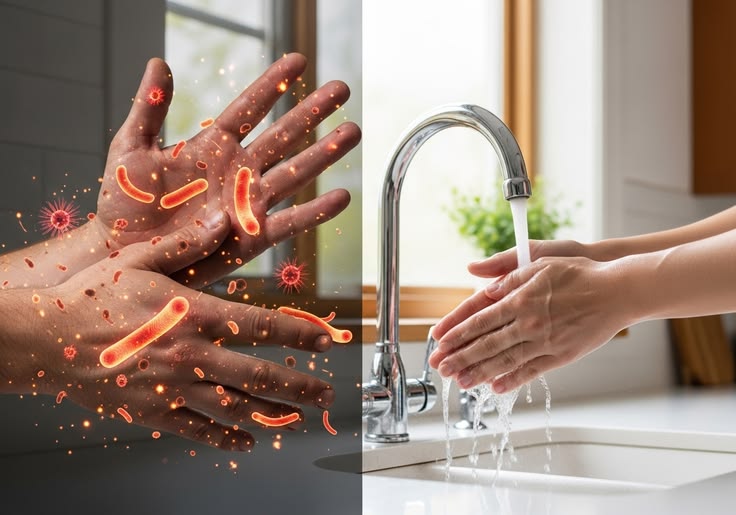
Most Food Handlers Ignore This Rule Daily: And It Is Costing Them Audits

Hand washing is the most ignored rule in food businesses. A quick rinse. No soap. Straight back to food. No one stops it. No one checks it. That is where the risk begins.

Read Full Article →
HACCP Compliance

The Cold Hard Truth: Why Temperature Control is Quietly Sabotaging Your Audit

Admin
April 5, 2026 · 6 min read
HACCP Standard 3.2.2

You walk into an audit feeling confident. Paperwork looks fine. Staff seem trained. Then the auditor checks your fridge logs. Temperatures are missing. Some readings are out of range. No corrective action recorded. This is where many food businesses in Australia lose marks. In real audits, good systems fail because of weak temperature control. It looks small: but it directly impacts food safety audit results.

Live Verification Tool

Australian Food Temperature Danger Zone Checker

Current Probe Reading
°C
Equivalent: 75°F
< 0°C Frozen 0 to 5°C Cold 5 to 60°C DANGER ≥ 60°C Hot ≥ 75°C Cook
CRITICAL DANGER ZONE Extreme Hazard

5°C to 60°C: Bacteria Multiply Rapidly

Optimal bacterial growth occurs between 20°C and 45°C. Pathogens such as Salmonella, Campylobacter, Bacillus cereus, and Staphylococcus aureus double every 15 to 20 minutes!

Kitchen Action Required: Apply the Australian 2-Hour / 4-Hour Rule strictly. Discard any food held in this zone for over 4 cumulative hours!
Standard 3.2.2 Clauses 6 and 8 mandate businesses minimise time in this range.
FSANZ Rule Engine

Australian 2-Hour / 4-Hour Rule Calculator

1.5 Hours (90 minutes)
0 to 2 Hours
Refrigerate/Use
2 to 4 Hours
Use Immediately
Over 4 Hours
Throw in Bin
SAFE TO REFRIGERATE OR USE
Option A: Refrigerate immediately at 5°C or colder. Option B: Cook, reheat to 75°C core, or serve.
Bacteria have had minimal lag-phase growth. The cumulative time in danger zone is under 2 hours.

Technical Terms Simplified

Under HACCP, temperature is usually a Critical Control Point (CCP). Three terms every operator must understand:

Critical Limit
Safe Boundary
The measurable limit a food business must not exceed: for example, 5 degrees Celsius or below for refrigerated foods.
Verification
Proving It Happens
The documented evidence that your temperature monitoring programme is actually being carried out as designed, at the required frequency.

5 Steps to Bulletproof Compliance

1
Tighten Your Limits
Do not aim for 5 degrees Celsius: aim for 4 degrees Celsius to provide a meaningful safety buffer. This ensures that if equipment drifts slightly, you remain within legal limits.
2
Calibrate Monthly
Use an ice-slurry test (0°C +- 1°C) to ensure handheld probes are accurate. A probe reading 2 degrees Celsius out of range invalidates every record taken with it.
3
Monitor During Peak Hours
Check temperatures when doors are constantly opening, not just at 6 AM before service. Peak rush openings can spike internal temperatures rapidly.
4
Train the "Why"
Ensure staff understand that a temperature spike is not paperwork: it is an outbreak hazard that can lead to product recalls and audit failure.
5
Digital Documentation
Move away from paper logs to reduce "ghost" entries. Digital timestamps give auditors objective confidence.
Official Regulatory Standard Matrix

Australian Critical Food Temperatures Master Matrix

Statutory thermal benchmarks enforced under FSANZ Standards 3.2.2 and 3.2.2A. Each threshold acts as an actionable Critical Control Point (CCP) evaluated by Council Environmental Health Officers (EHO) and external certification auditors.

🔍
✓ Auditor Calibrated Buffer: Calibrate handheld thermometers monthly in an ice slurry (0°C +- 1°C) to prevent false compliance.

Real-Life Case: The "Cold Enough" Trap

Sydney Manufacturer: Certification Audit

A Sydney food manufacturer failed a food safety certification audit. Their wall display read 4 degrees Celsius: within limit. But stock at the back was sitting at 9 degrees Celsius due to poor airflow around pallet stacks.

Passed re-audit with zero non-conformances after adding distributed sensors.
Audit Readiness

Audit Nightmares: 5 Aussie Food Business Blunders That Shut Doors

May 10, 2025 · By Admin · 7 min read

Running a food business in Australia? The word "audit" can send a chill down anyone's spine: and not just from the cool room. One failed inspection can lead to fines, lost customers, or a forced closure. The honest truth: most failures happen because of simple things overlooked day to day.

01
Messy or Missing Records
Go digital. Log everything. Review weekly. No gaps.
02
Temperature Problems
Cold food under 5°C. Hot food over 60°C. Check twice daily.
03
Staff Not Trained Properly
Train everyone regularly. Ongoing habit, not once-off.
04
Poor Hygiene and Cleanliness
Deep clean weekly. Full checklist. Regular pest control.
05
Labelling and Allergen Mistakes
Follow FSANZ Standard 1.2. Separate prep tools. Check twice.
Hygiene and Prerequisite Programmes

Most Food Handlers Ignore This Rule Daily: And It Is Costing Them Audits

April 3, 2026 · By Admin · 5 min read

Hand washing is the most ignored rule in food businesses. A quick rinse, no soap, straight back to food. No one stops it. No one checks it. That is where the risk begins: and where non-conformances are recorded in real audits across Australia.

1
Set clear, written rules. Defined moments require washing.
2
Show technique visually. Demonstrate, do not just document.
3
Observe daily. Conduct random checks during service.
4
Keep stations stocked with soap and paper towels.
5
Correct issues in real-time to build genuine habits.
Aged Care · Audit Readiness

One Finding, Sixty-Four Points: How NSW Really Scores Your Aged Care Food Safety Program

Admin
· 7 min read
Food Safety Program Audits
Sixty-four points.

That is what a single critical finding adds to a NSW aged care food safety audit. It is also the exact threshold for an E rating, the lowest grade on the scale.

One finding. Not ten. The binders can be immaculate, the cleaning schedule signed to the minute, the menu approved by a dietitian. If the auditor finds one critical breach, the facility drops to the bottom of the scale, and the next audit comes within a month.

Most aged care managers know they need a Food Safety Program. Far fewer know how that program is actually scored.

The Good News First

99%
Licensed vulnerable persons businesses with an acceptable result, 2024-25
1,235
Audits and inspections conducted in the same year
29
Regulatory interventions: notices, orders or warning letters

It was not always this way. When mandatory audits began in 2009, just over one in five of these businesses failed their first audit. Of those, 93% passed the follow-up.

So the system works. But 29 interventions still means 29 facilities where something went badly wrong. The difference between them and everyone else is rarely the quality of the documents. It is what happens between the documents and the plate.

How the Scoring Works

When an auditor finds an issue, they raise a Corrective Action Request (CAR) and grade it minor, major or critical depending on the risk to food safety. Each grade carries points: minor 2, major 8, critical 64. The points are added together to give the facility its rating, and for Priority 1 facilities such as aged care, the rating decides how soon the auditor returns.

RatingPointsOutcomeNext audit (Priority 1)
A0 to 15Acceptable12 months
B16 to 31Acceptable6 months
C32 to 47Marginal3 months
D48 to 63Unacceptable1 month
E64 and aboveUnacceptable1 month, or sooner if required

Think about what that means in practice. An A buys a full year. A C means four audits a year, with all the preparation, disruption and cost that comes with each one.

Try It Yourself

NSW Audit Score Calculator (Priority 1)

Minor findings
2 points each
3
Major findings
8 points each
2
Critical findings
64 points each
0
22 total points
Rating B: Acceptable
Next audit due in 6 months
Acceptable, but you have halved the time until the auditor returns.

Illustrative only. Based on the NSW Food Authority's published CAR points and Priority 1 audit frequency model. Your auditor's grading of each finding is final.

Run the Numbers on Your Own Kitchen

Take a fairly ordinary audit. The program document has not been updated since the menu changed. One cleaning record has gaps. The dishwasher temperature log is incomplete. That is three minor findings: 6 points.

Now add two major findings. A batch of cooked meat was cooled without any time and temperature record. The probe thermometer has never been calibrated. That is another 16 points.

Total: 22 points. A B rating. The auditor is back in six months instead of twelve. Swap either major for a critical, such as potentially hazardous food held in the danger zone and served anyway, and the facility is on an E.

The Eight Areas the Auditor Examines

  1. Food safety program
  2. Construction and maintenance
  3. Hygiene and sanitation
  4. Process control
  5. Product identification, traceability and recall
  6. Analytical and testing
  7. Prerequisite programs, including allergen management
  8. Corrective action
Look Closely at Number 8
One recognised finding is failing to effectively implement the corrective actions raised at the previous audit. Last year's problem, left unfixed, becomes this year's finding. And under the Food Authority's escalation policy, a minor CAR that is not addressed does not stay minor.

Where Programs Lose Points

A Food Safety Program is supposed to systematically identify the hazards that could reasonably occur in every food handling operation, and pinpoint where each one can be controlled. Programs usually lose points not because they are missing, but because they have drifted:

  • The menu moved on, the program did not. New texture-modified dishes, a new supplier or a new combi oven, with no update to hazards or controls.
  • Monitoring without meaning. Temperatures recorded every day, but out-of-range readings with no corrective action written beside them.
  • Supplier lists gone stale. The Food Authority expects facilities to maintain a list of approved suppliers for audit. Emergency purchases from an unapproved supplier during a shortage are a classic gap.
  • Knowledge that lives in one head. In NSW, food handlers in these facilities do not need a formal food safety qualification. But they must have skills and knowledge suited to their work. Auditors test that by asking questions, not by reading certificates.

Technical Terms Simplified

CAR
Corrective Action Request
A formal finding raised by the auditor, graded minor, major or critical, that the facility must fix.
Priority 1
Highest Risk Classification
The Food Authority's highest risk category, which includes aged care. It triggers the most frequent audit schedule.
Verification
Proving It Is Done
Showing the control is carried out as written, for example by reviewing logs and observing staff.

5 Steps to Protect Your Rating

1
Treat Every CAR as a Deadline
Close it, document it, and keep the evidence where the auditor will look first.
2
Link Reviews to Operational Change
Any change to menu, supplier, equipment or texture-modified diets triggers an update, not just the annual review.
3
Write the Corrective Action Beside the Reading
Every out-of-range figure needs a note: what was done, what happened to the food, and who decided.
4
Rehearse the Auditor's Questions
Ask cooks and kitchen hands to explain cooling, reheating and allergen controls on a normal shift.
5
Commission an Independent Internal Audit
Score your facility on the same A to E scale before the regulatory auditor does.

Want to know your score before the auditor does?

ANFSI's licensed auditors run mock regulatory audits for aged care facilities using the Food Authority's own rating model, and our consultants can rebuild a Food Safety Program that has drifted.

Sources: NSW Food Authority (Regulatory food safety audits; Audits in the food industry; Vulnerable Persons Food Safety Scheme Consultative Committee summary, August 2025; Evaluation of the Vulnerable Persons Food Safety Scheme; Guidelines for food service to vulnerable persons).
← Back to all articles
Audit Readiness · Enforcement

The Fine Is the Cheapest Part: What a Food Safety Failure Really Costs a NSW Business

Admin
· 7 min read
NSW Food Act 2003
One critical breach.

In council areas running Scores on Doors, that is all it takes. A single critical breach, worth 8 points on the council's Food Premises Assessment Report, makes the business ineligible for a rating. It is marked "No Grade" no matter how few other points it scored.

The rest of the kitchen can be spotless. The bench tops can gleam. One chicken breast sitting at 12°C and the certificate in your window is gone.

Most owners think of food safety risk as a fine. In reality, the fine is usually the cheapest part. The expensive parts are the ones that follow you online, into court, and sometimes into your personal finances.

Why Regulators Take It Personally

4.67M
Food poisoning cases in Australia each year
47,900
Hospital admissions
38
Deaths
$2.1B
Economic cost (FSANZ commissioned estimate)

And the finger points at our sector. FSANZ has stated that about two thirds of reported outbreaks were linked to food service and closely related retail businesses: restaurants, takeaways, caterers, camps and delis. That is why enforcement in NSW is layered, public and escalating.

The Five Rungs of the Enforcement Ladder

1
Losing Your Stars
Scores on Doors ratings run from Excellent (5 stars, 0 to 3 points) to Very Good (4 stars, 4 to 8 points) to Good (3 stars, 9 to 15 points). Above 15 points, or with any single critical failure, there is no grade at all. A blank window tells customers something. They just have to guess what.
2
Notices and Orders
Depending on the problem, officers can issue warnings or improvement notices directing the business to fix it. A prohibition order stops a business producing food, or stops it using specific equipment, until it complies. For a restaurant, that means the pass goes dark on a Friday night, with staff rostered and stock in the coolroom.
3
Your Name, Online, for a Year
Receive a penalty notice for an alleged food safety offence without challenging it, and the NSW Food Authority can publish it on its register. Listings generally stay up for one year. The register is updated weekly and promoted on social media.
4
Court, and Two Years of Visibility
If a matter goes to court and the business is found guilty, it goes on a separate prosecutions register. Details generally remain for two years after any appeal period.
5
When It Becomes Personal
Under the NSW Food Act 2003, knowingly handling food for sale in a way that will make it unsafe carries a maximum of 1,000 penalty units, two years' imprisonment, or both, for an individual, and 5,000 penalty units for a corporation. At the current NSW penalty unit value of $110, that is up to $110,000 and $550,000 respectively. Where a person ought reasonably to know their handling is likely to make food unsafe, the maximum is 750 penalty units for an individual and 3,750 for a corporation.
A Company Structure Is Not a Shield
When a corporation commits these offences, directors and others involved in managing it can face executive liability themselves.

Technical Terms Simplified

Improvement Notice
Written Direction
Lists the defects, the action required and a deadline.
Prohibition Order
Production Stops
Stops food production, or the use of specific equipment, until compliance is restored.
Critical Breach
Rating Killer
A serious failure, such as unsafe temperature control, that on its own removes any Scores on Doors rating.

Picture the Timeline

Illustrative Scenario

Tuesday: an unannounced council inspection finds cooked rice cooling on the bench and no probe thermometer in sight. No Grade.
Wednesday: an improvement notice arrives with a seven-day deadline.
Following week: the re-inspection finds the same issue. A penalty notice is issued.
Within weeks: the business name appears on a public register, and a local food blogger shares the link.

No one got sick. The business still paid four times: in stars, in fines, in reputation and in lost trade.

5 Steps to Stay Off the Ladder

1
Know Your Critical Points
Temperature control, cooling, cross contamination and pest activity are where critical breaches live. Check them daily.
2
Treat Every Notice as Urgent
An improvement notice is your last low-cost chance. Fix it early and document the fix.
3
Run Your Own Inspection
Use the council's assessment categories as your checklist. Do it monthly, unannounced, on a busy shift.
4
Keep Your Food Safety Supervisor on the Floor
Most critical breaches happen when the person who knows the rules is not there.
5
Get an Independent View
Staff stop seeing what they walk past every day. An outside auditor does not.

Would your kitchen hold its stars on an unannounced visit?

ANFSI's licensed auditors run inspection-style internal audits so you find the critical breach before the council does.

Sources: NSW Food Authority (Name and shame registers; Scores on Doors guidelines and consumer guide); Food Act 2003 (NSW); NSW local council Scores on Doors guidance; Food Standards Australia New Zealand.
← Back to all articles
Compliance · Food Labelling

A, I or M: The Three Letters That Can Now Put Your Menu on the Wrong Side of the Law

Admin
· 7 min read
Australian Consumer Law
Sixty-two per cent.

That is roughly how much of the edible seafood Australians eat is imported, mostly from Asia, with New Zealand and Norway also major suppliers. For decades, a diner ordering "fresh flathead" at the local pub had nothing but the menu's word to go on.

That changed on 1 July 2026. Today, a single missing letter beside your fish and chips is a breach of the Australian Consumer Law. Most venues have updated the printed menu. Far fewer have checked the delivery app, the specials board or the invoice folder. That is where the exposure sits.

What Actually Changed

The rule has a long name: the Competition and Consumer (Australian Consumer Law, Country of Origin Information for Seafood for Immediate Consumption) Information Standard 2025. It sits under the Australian Consumer Law, not the Food Standards Code. That one detail matters, because it means a different regulator can walk through your door.

It captures any seafood that is ready to eat the moment you hand it over, whether the customer eats in, takes it away or has it delivered.

Covered
  • Restaurants, cafes, pubs and clubs
  • Takeaways and food trucks
  • Market stalls selling ready-to-eat food
  • Hotels and motels, room service included
  • Casinos and amusement parks
Not covered
  • Canteens and schools
  • Prisons
  • Hospitals and medical institutions

The label must be visible before the customer orders, on paper or on screen.

Three Ways to Label: Pick One

A
Single Letter With a Legend
A beside Australian seafood, I beside imported, M for mixed. You must include a key explaining the letters. For a mixed dish, you can tag each seafood ingredient separately instead.
B
Full Words
Write "Australian", "imported" or "mixed" after the dish name or inside it. No legend needed.
C
One Statement for the Whole Venue
"All our seafood is Australian" works, but only if every piece of seafood you serve shares one origin. Buy even one imported prawn line and this option is gone.

Whichever you choose, the wording must be clear, legible, in English, and truthful.

The Grey Zones That Catch Venues Out

The test is whether you market the dish as seafood. That means the name or description mentions seafood, or the dish is commonly understood to contain it.

You must label
  • Prawn toast, seafood chowder, chilli mussels, salmon poke
  • A curry noodle soup whose description lists prawns, even if the dish name does not
  • Fish, eels, crustaceans, molluscs (snails included), roe and caviar, sea urchins and sea cucumbers, saltwater or freshwater
You do not need to label
  • A green curry seasoned with fish sauce
  • A tuna melt made with canned tuna, or anything using anchovy paste or bonito flakes
  • A dish not sold as seafood with only a minor amount of it
  • Food at a fundraising event
  • Orders served more than 24 hours after they are placed
  • Crocodile, frogs' legs, seaweed or squid ink

When in doubt, label it. An extra letter costs nothing. A missing one can cost a great deal.

Your Paper Trail: Three Months, No Excuses

You must keep proof of origin for three months from the last day the dish was offered. Invoices, supplier emails or a photo of the carton all count, and the state consumer protection agency can demand to see them. If a supplier's paperwork is silent on origin, ask in writing. They are obliged to give it to you in writing, and a supplier who refuses can be reported.

$2.5M
Maximum penalty for individuals
$50M
Or 30% of turnover, for businesses
3 mths
Record keeping after a dish is last offered

For lesser breaches, infringement notices and enforceable undertakings are also on the table.

Two Regulators, One Plate

Most operators miss this. The origin letter is a consumer law matter handled by Fair Trading. The name of the fish is a food law matter. Under the NSW Food Act 2003, describing food incorrectly is an offence, and that includes selling one seafood species as another. The safe reference is the Australian Fish Names Standard, and the NSW Food Authority publishes penalty notices on its public name and shame register.

Illustrative Scenario: The Auditor's View

The specials board reads "Local snapper (A)". The invoice in the office reads "frozen fillets, product of New Zealand, different species".

That is two problems on one plate.

Supply Swaps Without Reprinting

Suppliers run short. Origins change. You do not need to reprint menus for a temporary switch. A removable sticker over the letter, or a clear sign at the ordering point, is acceptable. Digital menus, however, must be updated.

Technical Terms Simplified

Immediate Consumption
Ready to Eat
Food that is ready to eat as soon as it reaches the customer.
Marketed as Seafood
The Trigger Test
The dish name or description refers to seafood, or customers would reasonably expect it to contain seafood.

5 Steps to Bulletproof Compliance

1
Map Every Seafood Line
Go through the dine-in menu, takeaway menu, specials board, catering list and every delivery platform. List each dish and its seafood ingredients.
2
Match Each Ingredient to an Invoice
No invoice showing origin? Request written confirmation from the supplier this week.
3
Apply One Method Everywhere
Mixing methods across menus confuses customers and inspectors alike.
4
Build a Supply Swap Kit
Pre-printed A, I and M stickers plus a counter sign template. Assign one person to update apps the same day.
5
Brief Front of House
Staff should be able to answer "Where is the barra from?" without guessing.

Need a second set of eyes on your menu?

ANFSI's labelling specialists can review your menus, supplier documents and traceability records before an inspector does.

Sources: Department of Industry, Science and Resources; business.gov.au; NSW Government (Fair Trading); Department of Agriculture, Fisheries and Forestry; NSW Food Authority.
← Back to all articles
Audit Readiness · Standard 3.2.2A

The Law Says You Don't Need a Single Temperature Record: Here Is Why That Should Worry You

Admin
· 7 min read
Food Safety Management Tools

Read Standard 3.2.2A closely and you will find a sentence most kitchen managers never notice.

A category one food business does not strictly have to write anything down. It can prove it is handling food safely another way instead, including standing in front of the Environmental Health Officer and explaining how things are done. The regulator calls this "walk and talk".

Sounds like a gift. It is not. On a busy Friday, with the head chef off sick and a casual on the pass, "walk and talk" becomes "stand and stammer". And a business with no records has nothing to fall back on.

Why This Standard Exists

A 2022 study commissioned by FSANZ put food poisoning at about 4.67 million cases a year, with 47,900 hospitalisations, 38 deaths and $2.1 billion in economic cost. FSANZ has also reported that roughly two in every three recorded outbreaks trace back to food service and related retail.

FSANZ's reasoning was blunt. The sector moves fast, and its workforce is mobile, diverse and often untrained. So Standard 3.2.2A was gazetted on 8 December 2022 and became enforceable on 8 December 2023. We are now close to three years in, and council inspections reflect that.

Are You Category One or Two?

Category one

Caterers and food service businesses that take potentially hazardous food and turn it into something ready to eat that still needs temperature control. Restaurants, cafes, clubs, hotel kitchens and caterers. All three tools apply.

Category two

Mainly sells ready-to-eat potentially hazardous food it did not make itself. Needs a Food Safety Supervisor and trained food handlers, but not the substantiation tool.

The Nine Things You Must Be Able to Prove

Category one businesses must substantiate nine "prescribed provisions" drawn from Standard 3.2.2. Each one is a question an EHO can ask. Each one needs an answer you can show.

  1. Receipt of potentially hazardous food
  2. Storage
  3. Display
  4. Transport
  5. Pathogen reduction during processing (cooking)
  6. Cooling
  7. Reheating
  8. Cleaning
  9. Sanitising

The "Walk and Talk" Trap

FSANZ allows flexibility on purpose. Evidence can be written or electronic records, notes on invoices, photographs, written SOPs, or talking the officer through your process on the floor. But flexibility cuts both ways. The onus sits with the business, not the officer. And if the officer believes a critical activity is not being properly managed, they can require you to start keeping records.

Here is what a weak walk and talk looks like in practice:

  • The SOP says cooked rice is blast chilled. The cook says it "goes in the cool room when it's cooled down a bit".
  • Staff know the fridge should be "cold", but not the figure.
  • The sanitiser is in the spray bottle, but no one knows the dilution or contact time.
  • The probe thermometer has never been checked against ice slurry.

None of these are paperwork failures. They are knowledge failures. Records simply expose them earlier, when they are cheaper to fix.

If You Do Keep Records

Two rules matter. First, any record you are required to make must be kept for three months, a period FSANZ chose so it would support foodborne illness investigations. Second, if a record shows something went wrong, such as a fridge running warm after a compressor failure, you must act on it and should record what you did.

Auditor Insight
A log full of out-of-range readings with no corrective actions is worse than no log at all. It is written evidence that you knew and did nothing.

A Scenario Worth Rehearsing

Illustrative Scenario

An EHO arrives mid service and asks about last night's braised beef. How was it cooled? The widely used benchmark is cooling from 60°C to 21°C within two hours, then down to 5°C within a further four. A business with a cooling log hands over one sheet of paper. A business relying on walk and talk needs whoever is on shift to explain the method, the times, the target temperatures and what happens if the batch misses them.

Ask yourself honestly which answer your Saturday team would give.

Technical Terms Simplified

Prescribed Provision
The Nine Requirements
Temperature, processing and cleaning requirements in Standard 3.2.2 that category one businesses must prove they meet.
Substantiate
Show the Evidence
Show, with evidence an officer will accept, that you are actually doing what the standard requires.

5 Steps to Bulletproof Compliance

1
Choose Your Evidence for Each Provision
A hybrid works well: SOPs for cleaning, records for high-risk steps such as cooling and receipt.
2
Record the Steps That Fail Silently
Cooling and receiving temperatures cannot be verified after the fact. Write them down.
3
Rehearse Walk and Talk With Every Shift
Pick a random staff member each week and ask them to explain one provision as if an EHO were asking.
4
Keep Your Food Safety Supervisor Visible
A certificate in the drawer does not help if the FSS is never on the floor when high-risk food is handled.
5
Close the Loop
Every out-of-range reading gets a documented corrective action: what happened, what was done with the food, and who decided.

Would your team pass an unannounced walk and talk today?

ANFSI's licensed auditors run independent internal audits and council inspection preparation that test your systems the way an EHO will.

Sources: Food Standards Australia New Zealand (Standard 3.2.2A and user guide); NSW Food Authority; state health department guidance on Standard 3.2.2A.
← Back to all articles
Compliance · Health and Community

Six Residents Is All It Takes: The Food Safety Rules Behind Every Hospital and Aged Care Meal

Admin
· 7 min read
Standard 3.3.1

Here is a fact that surprises most people outside the sector. In NSW, there is no formal food safety qualification required for the people preparing meals in hospitals and aged care homes.

Now here is the part that matters. The rules those kitchens operate under are among the strictest in the country. There is a licence, a documented Food Safety Program and a scheduled audit. The paperwork bar is high. The knowledge bar is higher.

When Do the Rules Kick In?

The threshold is small. Standard 3.3.1 of the Food Standards Code applies once a business processes or serves potentially hazardous food to six or more vulnerable persons.

The NSW definition covers acute care and psychiatric hospitals, nursing homes, hospices, same-day chemotherapy and renal dialysis services, respite and low care aged care, and delivered meals organisations. In practice, the Food Authority licenses about 1,200 businesses in this space, from hospitals and aged care facilities to respite services and some community delivered meals providers.

What Makes This Different From a Restaurant

A cafe answers to its local council. A vulnerable persons business does not. It sits in a licensed sector regulated by the NSW Food Authority, which audits and inspects every licensed business and puts new licensees through extra audits at the start to prove long-term compliance. Businesses with a good audit and compliance history may be able to use an approved third-party regulatory auditor instead.

The operating framework is a documented Food Safety Program. It has to systematically identify the hazards reasonably expected in every food handling operation and pinpoint where each hazard can be controlled. Auditors will also expect to see a list of approved suppliers.

Why the Bar Is So High

6+
Vulnerable persons that trigger Standard 3.3.1
~1,200
NSW businesses licensed under the scheme
$785K
Estimated cost per listeriosis case in Australia

Listeriosis has relatively few notified cases, yet it is by far the costliest foodborne disease in Australia because of how serious the illness is and how often it kills. Older residents and people with weakened immune systems are exactly who Listeria hits hardest. That is why the scheme exists.

What Is Actually on the Audit

NSW requirements go well beyond the paperwork. Kitchens must be built to protect food from contamination, be effectively cleaned and sanitised, and keep raw items like cut salad ingredients separate from processed food, with food covered or sealed.

And "no formal qualification" does not mean "no training". Every food handler and every person in charge must still have food safety skills and knowledge suited to what they do. An auditor will test that on the floor.

A Note on Childcare
Childcare centres fall under Standard 3.3.1 nationally. But under NSW law, they are not included in the vulnerable persons definition and do not need a licence. NSW children's services are covered separately under Standard 3.2.2A. See our article on hidden biological hazards in children's services.

Technical Terms Simplified

Vulnerable Persons Business
Six or More in Care
A business serving potentially hazardous food to six or more people in care, such as hospital patients or aged care residents.
Food Safety Program
The Documented System
Identifies food safety hazards and sets out how each one is controlled, monitored and corrected.

5 Steps to Bulletproof Compliance

1
Treat Your Food Safety Program as a Live Document
Review it whenever the menu, supplier or equipment changes.
2
Audit Your Supplier List
Every supplier of potentially hazardous food should be approved and current.
3
Focus on Post-Cook Handling
Texture-modified meals, sliced cooked meats and sandwiches pass through more hands after cooking.
4
Test Knowledge, Not Certificates
Ask kitchen staff to explain a control step, just as an auditor will.
5
Run an Independent Internal Audit
Find the gaps before the scheduled regulatory audit does.

Is your Food Safety Program audit-ready?

ANFSI's licensed auditors conduct regulatory and internal audits across hospitals, aged care and delivered meals services.

Sources: NSW Food Authority (Vulnerable persons scheme; Guidelines for food service to vulnerable persons); Food Standards Australia New Zealand (including FSANZ foodborne illness cost data).
← Back to all articles
Hygiene · Children's Services

The Cook Felt Fine by Lunch: Hidden Biological Hazards in Children's Services

Admin
· 6 min read
Biological Contamination

She was vomiting on Sunday night. By Monday morning she felt much better. By lunchtime she was plating up spaghetti for thirty toddlers.

That is how outbreaks start. Not with dirty kitchens, but with good people who feel well enough to work.

Biological hazards are the ones you cannot see: viruses, bacteria and the toxins some bacteria leave behind. In a children's service, the diners are small, their immune systems still developing, and many of them cannot tell you what they are allergic to. The margin for error is thin.

The 48-Hour Rule

48h
Food handlers stay away after symptoms stop
24h
Children stay home after symptoms resolve
8 Dec 2024
Standard 3.2.2A in scope for NSW children's services

NSW Health guidance is clear. Food handlers, health care workers and anyone caring for children or the elderly who has a suspected foodborne illness should stay away from work until at least 48 hours after their symptoms stop. "Feeling better" is not the test. Symptom-free for 48 hours is.

This matters most for norovirus. State health authorities warn that it is highly contagious and can move rapidly through day care centres and nursing homes.

What the Law Now Expects in NSW

Trained food handlers

Services that serve unpackaged, ready-to-eat, potentially hazardous food must make sure food handlers have suitable skills and knowledge. This is separate from the Food Safety Supervisor requirement. Services can choose how they train, including the NSW Food Authority's free online course.

Showing food is safe

Services that take potentially hazardous food and turn it into ready-to-eat meals must be able to prove they manage temperature control, processing, and cleaning and sanitising.

The Word That Catches Centres Out: "Process"

Many centre directors assume the rules apply only if they "cook". But the definition of "process" is wider than that. It includes chopping, cooking, drying, fermenting, heating, thawing and washing.

Thawing a tray of mince counts. Washing and chopping fruit for morning tea counts if the food is potentially hazardous and served ready to eat. The obligations follow the activity, not the job title.

The Domestic Fridge Problem

Plenty of smaller services still rely on household fridges. The Food Authority warns that overloading a domestic fridge and opening the door constantly slows cooling and gives harmful organisms more time to grow. A fridge stuffed to the shelves at 3pm, with bottles, lunchboxes and leftovers, is a classic finding.

Allergens: When in Doubt, Tell the Parents
Allergens are not biological contamination, but in children's services they travel together. The Food Authority's position is plain: if you are not completely certain you can serve a child a meal free of their allergen, you must tell the parents.

Technical Terms Simplified

Biological Hazard
The Invisible Risk
A living organism, or a toxin produced by one, that can make food unsafe. Examples include norovirus, Salmonella and Listeria.
Exclusion Period
Time Away
The time an ill staff member must stay away from food handling after symptoms stop.

5 Steps to Bulletproof Compliance

1
Write the 48-Hour Rule Into Your Illness Policy
Record when symptoms stopped, not when staff felt better.
2
Map Every "Process" Step
List every task that thaws, washes, chops, cooks or reheats potentially hazardous food.
3
Pick Your Evidence
Records, SOPs or demonstration, but make sure whoever is rostered on can explain it.
4
Fix Fridge Capacity
If the fridge is always full, you need a bigger one or a stock rotation plan.
5
Keep Allergen Plans Current
Every enrolment update should flow straight to the kitchen.

Want a fresh set of eyes on your centre's kitchen?

ANFSI delivers training for staff serving vulnerable groups and independent internal audits for children's services.

Sources: NSW Health (foodborne illness outbreak control guideline); state health authority norovirus guidance; NSW Food Authority (Children's services; Food safety requirements for children's services guideline); NSW local council guidance.
← Back to all articles
Compliance · New Businesses

Your Fit-Out Is Finished. Your Food Business Might Still Be Illegal.

Admin
· 6 min read
Starting Out in NSW

The coffee machine is plumbed in. The menu is printed. Opening day is all over social media.

And not one government agency knows you exist.

Every year, new operators pour their savings into a fit-out and then trip over paperwork that takes less time than choosing the tiles. In NSW, trading without notifying the right authority can get you fined before you have sold your first flat white.

Step One: Know Who Regulates You

This is the first fork in the road, and many owners take the wrong branch.

  • Retail food businesses such as cafes, restaurants and takeaways are overseen by their local council and must notify council before they start trading.
  • Higher-risk producers, processors and transporters need a licence from the NSW Food Authority, which audits or inspects them directly. Think meat, dairy, seafood, eggs, high-risk plant products, and food service to vulnerable persons in hospitals and aged care.
  • Manufacturers and wholesalers that don't need a licence still count as food businesses. This group also catches operators who would never describe themselves that way, like cooking schools, chemists, cinemas, petrol stations and even swimming pools.

Manufacturers, wholesalers, importers, caterers and home-based food businesses can generally notify the Food Authority online. Fail to notify, and a fine is possible.

The Trap for Anyone Buying an Existing Business
The previous owner's notification does not transfer to you. Notification records are private, so a new owner must notify again with their own details.

Pre-Opening Inspections

Many councils will not let you open until they have seen the premises. In some areas, once council receives your notification, its Environmental Health team books a pre-opening inspection. You cannot prepare or sell food until you pass. Some councils also schedule an operational inspection 30 to 60 days after opening.

Check your own council's process early. A failed pre-opening inspection because the hand basin is in the wrong spot is an expensive delay.

The Food Safety Supervisor Rules Nobody Reads Twice

If you handle unpackaged, ready-to-eat, potentially hazardous food, you almost certainly need a Food Safety Supervisor (FSS). NSW rules require:

1
Trained FSS per premises (or per business for mobile caterers)
On site
Copy of the FSS certificate kept on the premises at all times
5 yrs
Maximum age of the FSS certificate
30
Operational days to replace a departing FSS

"Operational days" means days you actually process and sell food. It does not mean you get a month's grace if you trade seven days a week. And one certificate does not cover a group. Each outlet requires its own FSS, and that person needs to be present at the shop regularly, not just listed on paper.

Technical Terms Simplified

Notification
Telling the Regulator
Formally registering your business details before you trade. It is not a licence, but it is compulsory.
Licence
Higher-Risk Sectors
Required only for higher-risk sectors regulated directly by the NSW Food Authority.

5 Steps Before Opening Day

1
Confirm Your Regulator
Council, Food Authority, or both. Call the Food Authority helpline if unsure.
2
Notify Before You Trade
If you bought the business, notify again in your own name.
3
Book the Pre-Opening Inspection Early
Leave room to fix fit-out issues.
4
Appoint and Certify Your FSS
One per premises, certificate on site, expiry date in your calendar.
5
Train Every Food Handler
Under Standard 3.2.2A, handlers need skills and knowledge from day one, not after the first inspection.

Opening soon?

ANFSI can review your fit-out, draft your SOPs and prepare your team for the council inspection before your doors open.

Sources: NSW Food Authority; Service NSW; NSW local council pre-opening inspection guidance.
← Back to all articles
Compliance · Transport and Distribution

The Riskiest Room in Your Supply Chain Has Wheels

Admin
· 6 min read
Cold Chain

Your coolroom has a calibrated probe, a daily log and an alarm. Your delivery van has a sticker that says "refrigerated".

Food spends hours in transit between the processor and the plate. Doors open at every drop. Summer sun bakes the roof. And unlike a kitchen, nobody is watching the thermometer. That is why NSW treats wholesale food transport as a licensed activity in its own right.

Who Needs a Licence?

The NSW Food Authority licenses wholesale transport businesses carrying:

  • Plant products: leafy greens, salads, sprouts, unpasteurised juice, fresh cut fruit and vegetables, vegetables in oil
  • Meat: carcases, boxed meat and processed meat, including poultry and game
  • Dairy: raw milk collection and processed dairy products
  • Eggs: cracked eggs for processing and egg products
  • Seafood: live and processed seafood

If your business moves any of these, check your licence status before the Food Authority checks it for you.

The Temperatures That Matter

≤7°C
Carcase surface temperature
≤5°C
Internal temperature of other meat
Frozen
Frozen food stays frozen for the whole journey

Across all categories, potentially hazardous food must travel under temperature control. There is one well-known exception. A retail butcher delivering to a non-retail customer, such as a club, hotel, hospital or restaurant, within 30 minutes of the shop does not need refrigeration, as long as it can show the product stays at or below 5°C.

Note the Condition
"We're only ten minutes away" is not evidence. A probe reading is.

Vehicles Are Food Premises Too

Transport vehicles must be designed to protect food from contamination and must be cleanable. Surfaces must be non-toxic and able to withstand food, detergents and sanitisers, and the vehicle must keep out odours, smoke and dust. For dairy transport, the Food Authority inspects vehicles when the licence is issued and then every three years.

What the Regulator Recommends

Two simple practices come straight from the Food Authority: service each vehicle's refrigeration unit every year, and pre-cool the vehicle before loading. A warm van loaded with cold stock spends its first half hour warming the product. Pre-cooling costs nothing but time.

Drivers Are Food Handlers

Transporters must follow personal hygiene rules, such as starting each day in clean clothing and washing hands whenever they might contaminate food. A driver who handles cartons after a fuel stop and a pie is a food handler with dirty hands.

Technical Terms Simplified

Temperature Control
Safe Zones
Keeping food at 5°C or below, or 60°C or above, or another temperature the business can prove is safe.
Pre-Cooling
Cold Before Loading
Running the refrigeration unit until the cargo space reaches temperature before any food is loaded.

5 Steps to Bulletproof Compliance

1
Confirm Your Licence Category
Carrying mixed loads may mean more than one category.
2
Pre-Cool Every Run
Make it a written step on the driver's checklist.
3
Probe at Dispatch and Delivery
Two readings per load prove the chain held.
4
Service Refrigeration Annually
Keep the service report with the vehicle records.
5
Put a Cleaning Schedule in Every Cab
Signed and dated, with sanitiser details.

Moving high-risk food?

ANFSI conducts supplier and subcontractor audits that test your cold chain from dispatch to dock.

Sources: NSW Food Authority (Food transport vehicles; Meat vans; Animal food vans; Dairy food transport vehicles).
← Back to all articles
HACCP · Food Manufacturing

The Customer Found It Before You Did: What a Decade of Australian Recalls Tells Manufacturers

Admin
· 7 min read
FSANZ Recall Data
Ninety-two.

That is how many food recalls FSANZ coordinated in Australia in 2025 alone. Over the decade from 2016 to 2025, the total reached 866.

Most were not caused by exotic failures. They were caused by a wrong label, a missed ingredient change or a production line that was not fully cleaned between runs. And far too often, the first person to spot the problem was the person who bought the product.

92
Recalls coordinated in 2025
866
Recalls from 2016 to 2025
87
Average recalls per year over the decade

The Two Causes That Dominate

Across 2021 to 2025, undeclared allergens and microbial contamination topped the list of recall reasons. FSANZ reads the rising trend in two ways. More recalls can signal real problems in the food supply. It can also mean the safety net is working. Most recalls are precautionary, triggered by internal testing, retailer reports or consumer complaints.

How Allergen Problems Are Actually Found

This is the statistic that should worry every manufacturer. For undeclared allergen recalls, customer complaints are the most common way the problem is discovered.

That means the product has already left the building, passed through distribution, reached a shelf and been eaten, before anyone noticed.

The Root Causes

FSANZ now groups allergen recall root causes into six categories. Two of them come up repeatedly in real audits:

Accidental cross contamination

Allergens entering through a raw ingredient or during production.

Allergen labelling knowledge

A business not understanding, or misreading, what the labelling rules require.

FSANZ's earlier analysis gives concrete examples. One label listed pasta without declaring wheat. Another product was reformulated without the label being updated. Another had ingredients that were never fully translated into English. None of these require a laboratory to prevent. They need a review process.

Are You Even on the Regulator's Radar?
In NSW, food manufacturers and wholesalers that don't need a licence still have to notify the Food Authority. This includes caterers, importers and home-based businesses selling food online or to other businesses. If you make food for others to sell and you have never notified, fix that first.

Technical Terms Simplified

Undeclared Allergen
Present, Not Labelled
An allergen in a product but not on the label, from an ingredient, cross contact or a packaging mix-up.
Consumer Level Recall
Off Shelves and Out of Homes
A recall that removes product from homes and retail shelves, not just from distribution.

5 Steps to Bulletproof Compliance

1
Lock Label Sign-Off to Recipe Changes
No reformulation goes live until the label has been checked against the new specification.
2
Verify Every Incoming Ingredient Specification
A supplier changing their blend changes your allergen profile.
3
Validate Changeover Cleaning
Visual cleanliness is not proof. Validate allergen removal between runs.
4
Run a Packaging Reconciliation
Wrong film on the right product is one of the most common failure points.
5
Test Your Recall Plan With a Mock Recall
Trace one batch forward and backward. Time it. Fix what slows you down.

Would your label survive a recall investigation?

ANFSI reviews labels, allergen controls and traceability systems for food manufacturers.

Sources: Food Standards Australia New Zealand (Australian food recall statistics; Undeclared allergen food recall statistics); NSW Food Authority; Service NSW.
← Back to all articles

Aged Care · Audit Readiness

Your Annual Food Safety Audit: A 30 Day Countdown for Aged Care Kitchens

Admin
· 6 min read
Vulnerable Persons Audits
Process control.

When the NSW Food Authority reported on audits across the vulnerable persons sector, that was the area it named as the main source of problems. Not missing binders. Not dirty floors. The day-to-day control of food as it is cooked, cooled, held and served.

That is good news. Process control is exactly what a well-run kitchen can fix in the weeks before an audit, if it starts early enough. Here is a practical countdown.

What the Auditor Will Look At

The Food Authority's own guide to audits describes what a licensed business must be able to show, including:

  • Critical food safety hazards identified, with procedures in place to control them
  • Descriptions of the products handled, and clear work instructions
  • Monitoring forms that are up to date
  • Designated supervisors and workers responsible for specific jobs
  • Good practice covering hygiene, chemical storage, pest control, training, recall, internal review and complaint handling

Audits in this sector have historically been scheduled with the facility, with the Food Authority committing to at least ten working days' notice. Ten working days is not long. The countdown below starts earlier.

The Audit Countdown

30
Days Out: Close the Old Findings
Pull last year's audit report. Check every corrective action request is closed with evidence. An unresolved finding from last time becomes a new finding this time.
21
Days Out: Match the Program to the Kitchen
Compare your Food Safety Program with the current menu, suppliers and equipment. New texture-modified meals, a new combi oven or a new supplier all need to be reflected.
14
Days Out: Audit Your Own Records
Review temperature, cooling, cleaning and calibration records. Every out-of-range reading needs a written corrective action beside it.
7
Days Out: Rehearse the Questions
Ask cooks and kitchen hands how they cool a batch, check a probe, handle an allergy change and deal with a failed fridge. Auditors test knowledge by asking.
1
Day Out: Make It Easy to Find
Program, licence, supplier list, training records and recent monitoring forms in one place. Confirm who will attend the opening and closing meetings.
Auditor Insight
Do not stage the kitchen for audit day. Auditors want to see normal operations, and a kitchen that runs differently on audit day usually shows it. The goal of the countdown is a kitchen that is always ready, not one that performs for a day.

On the Day: What to Expect

A regulatory audit typically follows a familiar shape: an opening meeting to confirm scope and changes since the last visit, a review of the Food Safety Program and records, an inspection of the kitchen and food handling in progress, conversations with staff, and a closing meeting where findings are explained.

Every finding is raised as a corrective action request and graded minor, major or critical. Those grades add up to your rating, and your rating sets the date of your next audit. Our article on how NSW scores aged care Food Safety Programs explains the points, and includes a live calculator.

After the Audit

Treat every corrective action as a deadline. Fix it, record what you did, keep the evidence and brief the team. The countdown for next year starts the day this audit ends.

Technical Terms Simplified

Process Control
Managing Food as It Moves
Control of receiving, cooking, cooling, holding, reheating and serving, where most findings arise.
CAR
Corrective Action Request
A formal audit finding, graded minor, major or critical, that must be fixed and evidenced.

5 Steps to Stay Audit Ready All Year

1
Diary the Countdown
Put the 30, 21, 14, 7 and 1 day tasks in the calendar the day your audit ends.
2
Review Records Weekly
A short weekly check stops gaps from building up.
3
Rotate Staff Rehearsals
Ask one person one audit question every week.
4
Update the Program as You Go
Change the program when the kitchen changes, not the month before the audit.
5
Run a Mock Audit
An independent internal audit mid-cycle shows where you really stand.

Want a mock audit before the real one?

ANFSI's licensed auditors run mock regulatory audits for NSW aged care kitchens, scoring your facility the way the regulator will and giving you a clear action list.

Sources: NSW Food Authority (Audits in the food industry; Vulnerable Persons Food Safety Scheme Consultative Committee summaries; General Circular 02/2014; Regulatory food safety audits).
← Back to all articles
Audit Readiness · Regulatory Audits

Choose Your Own Auditor? How NSW Third Party Food Safety Audits Actually Work

Admin
· 6 min read
Regulatory Food Safety Auditor System

Here is something many licensed NSW food businesses never realise.

You may be able to choose your own regulatory auditor.

The NSW Food Authority's Regulatory Food Safety Auditor System, usually called the third party auditor or TPA system, lets approved auditors who are not Food Authority employees conduct regulatory audits of licensed businesses. It is not a shortcut. It is a privilege earned through a good track record.

The Obligation Stays the Same

Every licensee is responsible for a Food Safety Program that identifies and manages food safety risks. The Food Authority's summary of the system spells out that the program must be prepared, implemented, maintained, monitored and audited at a set frequency. The TPA system only changes who conducts the audit.

Who Can Use It?

A business must apply to the Food Authority, which assesses it against minimum criteria:

  1. An A or B rating at its previous two audits
  2. A satisfactory compliance history
  3. No outstanding enforcement action against the facility
  4. Operation in an industry the Food Authority has approved for the system

Facilities licensed to provide food to vulnerable persons are among the industries that can apply. Export registered establishments cannot move to the system.

What You Gain

  • Scheduling that suits you. Audits can be booked at a time that works for the business.
  • Continuity. The same auditor can perform all your audits, and familiarity with your systems may shorten the audit.
  • Group efficiency. A large business group may contract one auditor across all its sites.
  • Fewer disruptions. The regulatory audit can be run alongside other third party compliance audits, and costs may be reduced.

What Does Not Change

A TPA does not have the powers of a Food Authority authorised officer, but can rate an audit as unacceptable. Every audit result goes to the Food Authority, which follows up unacceptable results and runs its own verification program over the system.

Auditors can only audit within their approved scope. To be approved, they must meet the prerequisite competencies, attend Food Authority training on NSW legislation with a written assessment, and complete a witness audit with a government auditor. Auditors approved in another state still have to be trained and assessed under NSW law.

Choosing an Auditor
Check the Food Authority's public register of approved auditors, confirm the auditor's scope and endorsements cover your operation, and look for independence. The person auditing your Food Safety Program should not be the person who wrote it.
ANFSI on the Register

ANFSI's auditing team appears on the NSW Food Authority's public list of approved Regulatory Food Safety Auditors, including the cook chill endorsement, with coverage across Sydney and regional NSW.

Eligible facilities can nominate ANFSI for their regulatory audits.

Technical Terms Simplified

TPA
Third Party Auditor
An auditor approved by the Food Authority to conduct regulatory food safety audits of licensed businesses.
Scope
What They Can Audit
The industries and audit levels an individual auditor is approved to cover.

5 Steps to Move to a Third Party Auditor

1
Check Your Last Two Ratings
You need an A or B at both, with no outstanding enforcement action.
2
Confirm Your Industry Is Eligible
Contact the Food Authority if your facility holds multiple licence permissions.
3
Apply in Writing
Submit the Food Authority's application and wait for written approval.
4
Choose an Approved Auditor
Confirm scope, endorsements and independence on the public register.
5
Keep Your Rating High
Your eligibility depends on continued good performance.

Ready to nominate your auditor?

ANFSI's approved Regulatory Food Safety Auditors conduct NSW Food Authority regulatory audits for eligible licensed facilities, including cook chill operations.

Sources: NSW Food Authority (Regulatory Food Safety Auditor System factsheet; Audits, compliance and TPAs; Auditor requirements; Auditor training; Approved Third Party Auditors register).
← Back to all articles
HACCP · Food Manufacturing

A Certificate on the Wall Is Not a System on the Floor: What a HACCP Audit Really Tests

Admin
· 7 min read
Standard 3.2.1
Seven principles. Twelve steps.

And one question every HACCP auditor is really asking: does the system on paper match what happens on the floor?

Plenty of manufacturers have a HACCP plan. Far fewer have one that survives a walk from the receiving dock to the dispatch bay. That walk is where HACCP audits are won and lost.

HACCP in One Paragraph

HACCP stands for Hazard Analysis and Critical Control Point. Australia's Standard 3.2.1 is built on the principle that food safety is best achieved by identifying and controlling hazards during production, as described in the HACCP system adopted by the Codex Alimentarius Commission, rather than relying only on testing the finished product.

Where a Food Safety Program is required, the business must systematically examine its food handling operations to identify hazards, set out its program in a written document kept at the premises, comply with it, and review it at least once a year.

The Seven Principles

The NSW Food Authority's guideline for developing a Food Safety Program sets out the seven principles within twelve logical steps. The principles are:

  1. Conduct a hazard analysis
  2. Determine the critical control points (CCPs)
  3. Establish critical limits for each CCP
  4. Establish monitoring procedures
  5. Establish corrective actions
  6. Establish verification procedures
  7. Establish documentation and record keeping

The first five steps come before principle one: assemble the team, describe the product, identify its intended use, build a flow chart, and confirm that flow chart on site.

Two Very Different HACCP Audits

Regulatory audits

For businesses licensed by the NSW Food Authority, such as meat, dairy, seafood and high-risk plant products. The audit checks the Food Safety Program and compliance with the relevant Food Safety Scheme. Failing has legal consequences.

Customer and certification audits

Voluntary audits, often required by retailers or customers as a condition of supply. The standard is set by the certifier or buyer. Failing costs contracts rather than licences.

The principles are the same. The consequences, and often the checklists, are not. Know which audit you are preparing for.

Where HACCP Plans Fall Over

  • The flow chart is fiction. A rework loop, a new holding step or a second packing line never made it onto paper. Step five exists for a reason.
  • CCPs without proof. A critical limit copied from a textbook, with no validation that it actually controls the hazard in your process.
  • Monitoring nobody reads. Records are completed, but out-of-limit results sit there with no corrective action.
  • Weak foundations. Cleaning, pest control, maintenance and training programs are thin, so the CCPs carry more load than they should.
  • The annual review that never happened. Standard 3.2.1 requires it. Auditors ask for the evidence.
Auditor Insight
The fastest way to judge a HACCP system is to pick one finished product and trace it back through the records to its raw materials. If that takes more than a few minutes, or the records do not line up, the auditor will keep digging.

Technical Terms Simplified

CCP
Critical Control Point
A step where control is essential to prevent, eliminate or reduce a hazard to a safe level.
Critical Limit
The Line You Cannot Cross
The measurable value, such as a time or temperature, that separates safe from unsafe.
Prerequisite Programs
The Foundations
Cleaning, pest control, maintenance, supplier approval and training that support the HACCP plan.

5 Steps to Bulletproof Your HACCP Audit

1
Walk the Flow Chart
Take the printed chart onto the floor and correct every difference you find.
2
Validate Every Critical Limit
Keep the evidence that each limit controls the hazard in your process, not just in general.
3
Close the Corrective Action Loop
Every out-of-limit record needs a documented action and a named decision maker.
4
Run a Trace Test
Trace one batch forward and backward. Time it and fix the gaps.
5
Complete and Record the Annual Review
Date it, sign it and show what changed as a result.

Want to know how your HACCP system holds up?

ANFSI conducts independent internal, gap and supplier audits for food manufacturers, and helps rebuild Food Safety Programs that have drifted from reality.

Sources: Food Standards Code Standard 3.2.1 Food Safety Programs (Federal Register of Legislation); NSW Food Authority (General Guidelines for Developing and Implementing a Food Safety Program; Audits, compliance and TPAs).
← Back to all articles
Aged Care · Compliance

Two Rulebooks, One Kitchen: What Standard 6 Means for Aged Care Food Safety

Admin
· 7 min read
Strengthened Quality Standards

For the first time, food in residential aged care has a Quality Standard all of its own.

Your kitchen now answers to two rulebooks.

Under the new Aged Care Act 2024 and Aged Care Rules 2025, the strengthened Aged Care Quality Standards now apply, and Standard 6 covers food, drink and the dining experience. At the same time, every NSW aged care kitchen still operates under its NSW Food Authority licence and Food Safety Program.

Most facilities treat these as separate worlds: one for clinical and care staff, one for the kitchen. The facilities that do best treat them as one system.

What Standard 6 Actually Asks For

Standard 6 applies only to residential care homes. It asks providers to deliver food and drink that is nutritious, appetising and safe, with meals and a dining experience that reflect each person's needs and preferences.

The Commission's guidance for workers is practical. Kitchen staff should follow the organisation's food safety principles and make sure every meal matches the person's individual care and services plan.

That plan is where risk lives. The guidance lists what assessment should capture, including:

  • Ability to chew and swallow, including dysphagia
  • Allergies, intolerances and texture modification needs
  • Cultural and religious dietary requirements
  • The effect of medications or dementia on appetite
  • The level of help a person needs to eat and drink

Where the Two Rulebooks Meet

Standard 6 (Commonwealth)
  • Individual needs, preferences and dining experience
  • Menus shaped by residents' feedback
  • Dignity of risk and informed choice
  • Governing body oversight of food services
Food Safety Program (NSW)
  • Hazards identified and controlled
  • Temperature, cleaning and sanitising
  • Approved suppliers and traceability
  • Licence and scheduled regulatory audits

They overlap at four points, and these are where we see gaps open up:

  1. Allergen and diet information. The care plan records it. The kitchen has to receive it, trust it and act on it every single meal.
  2. Texture-modified meals. Standard 6 wants them appetising, with moulds, piping or scoops. Your Food Safety Program must cover the extra handling that brings.
  3. Serving temperature. A meal that sits too long to "look nice" is a food safety risk as well as a quality complaint.
  4. Food from outside. Families bringing in home cooking is part of belonging. It still needs a clear, documented process.

Dignity of Risk Is Not a Loophole

Standard 6 recognises that a resident may choose food or drink that carries a risk to them, sometimes called eating and drinking with acknowledged risk. Providers must respect that choice and help the person understand and manage the risk, using supported decision-making where capacity is impaired.

Auditor Insight
Dignity of risk covers a person's informed choice about what they eat. It never covers a kitchen's failure to control temperature, cross contact or hygiene. Keep those two conversations clearly separate in your records.

The Governing Body Is in the Frame

The Commission expects governing bodies to review reports on how food, drink and dining services are assessed, designed, prepared and delivered, and on the systems used to monitor and improve them. In other words, food service performance is now a board-level topic, not just a kitchen one.

Technical Terms Simplified

Standard 6
Food and Nutrition
The strengthened Quality Standard covering food, drink and dining in residential care homes.
Care and Services Plan
The Individual Record
Documents each person's needs, goals and preferences, including diet, texture and allergies.
Food Safety Program
The Kitchen's System
The documented program that identifies food safety hazards and sets out how each is controlled.

5 Steps to Align Both Systems

1
Map the Diet Information Flow
Trace how a new allergy or texture change travels from assessment to the kitchen. Time it.
2
Add Texture Handling to Your Food Safety Program
Moulding, piping and blending add handling steps and time out of temperature. Document the controls.
3
Set a Serving Time Limit
Agree how long plated meals can wait before service, and check it on busy shifts.
4
Write a Food From Home Procedure
Cover labelling, storage, temperature and who is responsible.
5
Report Food Safety to the Board
Include audit results, corrective actions and resident feedback in governance reporting.

Want both systems working as one?

ANFSI helps NSW aged care providers align their Food Safety Program with Standard 6, and our licensed auditors can test the result before the regulator does.

Sources: Aged Care Quality and Safety Commission (Strengthened Quality Standards, Standard 6: Food and nutrition guidance); Department of Health, Disability and Ageing; Aged Care Act 2024; NSW Food Authority (Vulnerable persons scheme).
← Back to all articles
Hygiene · Food Safety Fundamentals

What Is Food Safety, Really? The Three Billion Dollar Question Every Kitchen Should Answer

Admin
· 6 min read
Food Safety Basics
Three billion dollars.

That is roughly what foodborne illness now costs the Australian economy every year, up from $2.81 billion in 2023, according to updated estimates from Food Standards Australia New Zealand.

Most of that cost is not hospital bills. It is people too sick to work, and a quarter of all gastro cases in Australia are linked to contaminated food. Behind every one of those cases is a moment where somebody, somewhere, got a basic step wrong.

So what is food safety, really? Strip away the jargon and it comes down to one idea: keeping food free from anything that can make a person sick, from the moment it arrives at your door to the moment it reaches the plate.

The Numbers Behind the Definition

$3B
Annual cost of foodborne illness in Australia
1 in 4
Gastro cases linked to contaminated food
4.67M
Estimated food poisoning cases each year
$517M
Yearly cost of Campylobacter alone

FSANZ's latest modelling puts Campylobacter at the top of the cost list. Norovirus, pathogenic E. coli and Salmonella each cost the economy more than $150 million a year. Less common bugs such as Listeria carry a heavier price per case, because they are more likely to put people in hospital or kill them.

The Four Hazards Every Kitchen Manages

A hazard is anything in food that could cause harm. Every food safety system, from a corner cafe to a national manufacturer, is built around four families of them:

Biological

Bacteria, viruses and parasites. The biggest cause of food poisoning, and the reason temperature control matters so much.

Chemical

Cleaning chemicals, pest sprays and sanitiser residue. Usually a storage or labelling failure, not a cooking one.

Physical

Glass, metal, plastic, hair and packaging fragments. Often traced to damaged equipment or poor maintenance.

Allergens

Ingredients that are safe for most people but dangerous for some. Managed through labelling, separation and clear communication.

Why It Matters to Your Business

Food safety is often framed as a compliance chore. In practice it protects three things at once:

  • People. Your customers, residents, patients and staff. Older people, young children, pregnant women and anyone with a weakened immune system are hit hardest.
  • Your licence to trade. Standard 3.2.2 sets the day-to-day hygiene and handling rules, and Standard 3.2.2A adds training, supervision and evidence requirements for many food service businesses.
  • Your reputation. One outbreak, one public register listing or one bad review about a sick customer can undo years of hard work. (See our article on what a food safety failure really costs.)

The Five Controls That Do Most of the Work

You do not need a science degree to run a safe kitchen. Most foodborne illness is prevented by five controls, done every day without exception:

  1. Keep cold food at 5°C or below and hot food at 60°C or above
  2. Clean and sanitise food contact surfaces and equipment
  3. Wash hands properly and keep sick staff away from food
  4. Separate raw and ready-to-eat food at every stage
  5. Know every allergen in every dish, and tell customers accurately
Auditor Insight
Food safety failures are rarely caused by people who do not care. They are caused by systems that rely on memory. Written procedures, simple checklists and short daily checks turn good intentions into reliable habits.

Technical Terms Simplified

Hazard
Anything That Can Harm
A biological, chemical, physical or allergenic agent in food that could make someone sick or injured.
Contamination
How Hazards Get In
The transfer of a hazard into food, from hands, surfaces, equipment, pests or other food.

5 Steps to Build a Safer Kitchen

1
Walk Your Food's Journey
Follow one ingredient from delivery to plate and list every point where a hazard could get in.
2
Write Down the Five Controls
Turn temperature, cleaning, hygiene, separation and allergens into simple written procedures.
3
Train Everyone, Not Just the Supervisor
Every food handler needs the skills and knowledge for the work they actually do.
4
Check Daily, Record What Matters
Short, consistent checks beat long forms that nobody fills in.
5
Review After Every Change
New menu, new supplier or new equipment means a fresh look at your hazards.

Want your team trained by practitioners who audit?

ANFSI delivers food safety training built on what auditors actually find in Australian kitchens, plus gap audits that show exactly where your systems need work.

Sources: Food Standards Australia New Zealand (updated foodborne illness cost estimates, 2025; The annual cost of foodborne illness in Australia); Food Standards Code Standards 3.2.2 and 3.2.2A.
← Back to all articles
Hygiene · Kitchen Practice

Stop Washing the Chicken: Six Everyday Kitchen Habits That Quietly Spread Bacteria

Admin
· 6 min read
Clean, Separate, Cook, Chill

Plenty of careful cooks rinse raw chicken under the tap before it goes in the pan. It feels hygienic. It is one of the fastest ways to spread bacteria around a kitchen.

Stop washing the chicken.

When the UK's national food regulator surveyed consumers, 44% said they always washed chicken before cooking it. Its warning was simple: the splashing water carries Campylobacter onto hands, benches, clothing and equipment. Cooking kills the bacteria. Washing just moves them.

That matters here too. FSANZ's latest modelling names Campylobacter as the most costly foodborne pathogen in Australia, at around $517 million a year. The habit is small. The consequences are not.

Washing chicken is one of six everyday kitchen habits we see again and again, in homes, cafes and commercial kitchens alike. Each one feels harmless. Each one quietly undoes good food safety.

The Four Rules Behind Every Safe Kitchen

Clean
Hands, surfaces and equipment, then sanitise
Separate
Raw away from ready-to-eat, every time
Cook
Right through, checked with a probe
Chill
5°C or below, and cool food fast

Every habit below breaks at least one of these rules.

Six Habits That Quietly Spread Bacteria

1
Rinsing Raw Poultry
Splashing spreads bacteria well beyond the sink. Take the chicken straight from the pack to the pan or tray, and cook it right through.
2
Treating Clean as Sanitised
Cleaning removes grease and food. Sanitising kills the bacteria left behind. A bench wiped with a soapy cloth is clean, not safe. Clean first, then sanitise, and leave the sanitiser for its full contact time.
3
One Board for Everything
Raw meat on the board at 10am, salad on the same board at 11am. Use separate boards for raw and ready-to-eat food, or wash and sanitise thoroughly in between.
4
Thawing on the Bench
The outside of a frozen roast reaches the danger zone hours before the middle thaws. Thaw in the fridge, on the bottom shelf, in a container that catches drips.
5
Leaving Leftovers to "Cool Down"
A pot of stew left on the stove overnight is a bacterial incubator. Divide it into shallow containers and get it cold fast: from 60°C to 21°C within two hours, then to 5°C within a further four.
6
The Tea Towel That Does Everything
Drying hands, wiping benches and handling hot trays with the same cloth moves bacteria all day. In a food business, hands should be dried with single-use towels.
Auditor Insight
These habits rarely show up in written procedures. They show up when an auditor watches a busy shift. If you want to know how your kitchen really runs, stand and watch for thirty minutes without saying a word.

What the Law Expects in a Food Business

For businesses, these are not just good habits. Standard 3.2.2 requires food contact surfaces and utensils to be clean and sanitised, potentially hazardous food to be kept under temperature control, and hand washing facilities to be properly supplied. Standard 3.2.2A adds training and, for many businesses, evidence that cooling, cleaning and sanitising are actually being managed. (See our article on the Standard 3.2.2A walk and talk trap.)

Technical Terms Simplified

Sanitise
Kill What Is Left
Reduce microorganisms on a clean surface to a safe level, using heat or an approved chemical.
Contact Time
The Waiting Part
How long a sanitiser must stay on a surface to work. Wiping it off straight away defeats it.

5 Steps to Break the Habits

1
Put a Sign Above the Sink
A simple reminder not to rinse raw poultry changes behaviour quickly.
2
Set Up a Two-Step Cleaning Routine
Detergent first, sanitiser second, with the contact time written on the bottle.
3
Colour Code Your Boards
Separate boards for raw meat, seafood and ready-to-eat food, stored apart.
4
Plan Thawing a Day Ahead
Move tomorrow's frozen stock to the fridge at close of service.
5
Retire the All-Purpose Tea Towel
Single-use towels for hands, separate cloths for benches, changed often.

Want your team to lose these habits for good?

ANFSI delivers practical food safety training and on-site internal audits that catch the habits written procedures miss.

Sources: Food Standards Australia New Zealand (updated foodborne illness cost estimates, 2025); UK national food regulator consumer research on washing raw chicken (2014); Food Standards Code Standards 3.2.2 and 3.2.2A.
← Back to all articles
Compliance · Food Packaging

Is Your Packaging Part of the Problem? Food Packaging Compliance in Australia in 2026

Admin
· 6 min read
Standards 3.2.2 and 1.2.3
25 February 2026.

That was the day the last packaged food carrying old-style allergen labels ran out of time. From then on, every packaged product on an Australian shelf had to meet the Plain English Allergen Labelling rules. No more sell-through. No more exceptions.

For many food businesses, that deadline was the moment packaging stopped being a purchasing decision and became a compliance one. But allergen labels are only half of the story. The pack itself is part of your food safety system, and it is tested more often than most operators realise.

What the Food Standards Code Actually Says

In Australia, Standard 3.2.2 places three packaging duties on food businesses. When packaging food, you must use only packaging material that is fit for its intended use, use only material that is not likely to cause food contamination, and make sure there is no likelihood of the food being contaminated during the packaging process.

Standard 1.4.1 also sets maximum levels for certain contaminants that can end up in food through contact with packaging. And state food acts make selling unsafe food an offence, whatever the source of the problem.

The Chemical Migration Question

Chemicals can move from packaging into food. FSANZ spent three years studying the issue, including surveys of packaging chemicals in Australian and New Zealand foods and a database of more than 1,300 food contact materials. It concluded that dietary exposure was low and not a health concern, and that existing controls were sufficient.

The same review noted that some businesses would benefit from better awareness of migration risks and how to control them. In practice, the risk rises when packaging is used for something it was never designed for.

Higher risk situations
  • Hot or oily food in containers not rated for heat
  • Acidic food stored long term in unsuitable materials
  • Microwaving in packaging not designed for it
  • Reusing single-use packaging
Common kitchen shortcuts
  • Bin liners used to store or marinate food
  • Old chemical or ingredient buckets reused for food
  • Damaged or unsealed packs left in stock
  • Non food grade containers bought for price alone

The Allergen Label Rules Now in Force

Under Plain English Allergen Labelling, allergens must be declared in bold in the statement of ingredients, using the required plain English names. A separate summary statement must also appear, starting with the word "Contains" and listing only the allergens that must be declared.

Undeclared allergens are among the leading causes of food recalls in Australia. (See our article on what a decade of recalls tells manufacturers.) The pack is where that failure becomes public.

Auditor Insight
Ask your packaging supplier for a written statement that each food contact item is suitable for its intended use, including temperature and food type. If they cannot provide one, treat that as a warning sign, not a paperwork gap.

Technical Terms Simplified

Food Contact Material
Anything Touching Food
Packaging, containers, wraps, film and equipment that come into direct contact with food.
Chemical Migration
Packaging Into Food
The transfer of substances from packaging into the food it holds, influenced by heat, time and food type.

5 Steps to Packaging Compliance

1
List Every Food Contact Item
Containers, film, bags, trays, liners and labels, including what each is used for.
2
Get Supplier Declarations
Written confirmation that each item suits your food type, temperature and storage time.
3
Match Use to Design
No bin liners for food, no reused chemical buckets, no microwaving in unrated packs.
4
Audit Every Label
Check bold allergen declarations and the Contains statement against the current recipe.
5
Build Packaging Into Your Food Safety Program
Treat packaging receipt, storage and checks as controlled steps, not an afterthought.

Want your packaging and labels checked before a customer does?

ANFSI reviews food contact materials, supplier documentation and allergen labels, and builds packaging controls into your Food Safety Program.

Sources: Food Standards Australia New Zealand (Chemicals in food packaging; Proposal P1034 chemical migration from packaging; Plain English Allergen Labelling); Food Standards Code Standards 3.2.2, 1.4.1, 1.2.3 and Schedule 9; Queensland food safety regulator guidance on PEAL.
← Back to all articles
Aged Care · Audit Readiness

The Folder Is Not the Kitchen: What Auditors Look for in Aged Care Food Safety Management

7 min read
Standard 3.3.1
Forty-eight hours.

That number runs right through the NSW Food Authority's guidelines for food service to vulnerable persons. Cooked food served within it. Texture modified meals stored no longer than it. Opened ready-to-eat packs used inside it.

Auditors know the number by heart. On audit day, the real question is whether your kitchen can prove it lives by it.

Most aged care managers prepare by checking the folder. Auditors check the folder too, but only as a map. What they are really testing is whether the map matches the ground.

6+
Vulnerable persons that bring Standard 3.3.1 into play
48h
Maximum chilled life for cooked and texture modified food under the NSW guidelines
±1°C
Accuracy every temperature measuring device must achieve

Why Aged Care Audits Carry More Weight

Residents are older, often frail, and many live with conditions that turn a mild bout of food poisoning into a hospital admission. On top of that, almost every plate is personal:

  • Allergies and intolerances
  • Texture modified food and thickened drinks for swallowing difficulties
  • Diabetic, low salt and other clinical diets
  • Cultural and religious requirements
  • Personal likes, dislikes and nutrition goals

Get one of these wrong and the consequence lands on a person, not a checklist.

That is why the rules are strict. Any business serving potentially hazardous food to six or more vulnerable persons falls under Standard 3.3.1 and must run a documented, audited Food Safety Program. It is a Food Safety Program, not a HACCP certificate. In NSW, aged care facilities are licensed by the Food Authority and audited by the Food Authority or an approved third party auditor. Other states run their own schemes on the same national standard.

The Paper Trap

Paper is rarely chosen because it works. It is simply what has always been there. Auditors see the same weak spots again and again:

  • Scattered records. Fridge sheets by the coolroom, cleaning logs in the office, allergen lists taped to a wall.
  • Filled in later. A reading taken mid service and written up at the end of the shift, or not at all.
  • Out of date diet sheets. A resident's needs changed last week. The printed sheet in the kitchen still shows last month.
  • Verbal handovers. A new allergy passed on at shift change, or on a note left on the bench.
  • No live view. Managers find a missed check days later, if at all.
  • The pre-audit scramble. Hours spent hunting through months of paper once the audit date is set.
Auditor Insight
A week of fridge readings in the same pen, same handwriting and same neat figures tells its own story. Auditors look for records that read like a working kitchen: varied times, real numbers, and a corrective action beside anything out of range.

What Auditors Test on the Floor

The audit report groups findings into the eight areas every NSW auditor scores. This is what they actually check inside those areas when they walk an aged care kitchen, drawn from the control measures in the NSW guidelines.

Clean commercial kitchen with stainless steel dishwashing equipment
Auditors read the folder as a map, then walk the kitchen to check it.
What they look atWhat they expect to see
The programIt matches today's menu, equipment, suppliers and texture modified range, with a review against current practice and an internal audit at least once a year.
DeliveriesAn approved supplier list, and a recorded temperature for a representative item from each delivery: cold at 5°C or below, hot at 60°C or above, frozen food hard frozen.
Cooling60°C to 21°C within two hours, then to 5°C within a further four.
Reheating and servingAt least 60°C within an hour and a half, reheated once only, and no more than two hours from plating to the resident.
Texture modified mealsBlenders and stick mixers taken apart for cleaning, food brought to 70°C for two minutes, and no more than 48 hours in storage at 5°C or below.
Listeria controlsA seven-day limit on chilled ready-to-eat foods that support Listeria growth, pasteurised dairy only, and sliced cooked meats from a licensed manufacturer.
Support programsCleaning schedules with chemical strength and contact time, pest reports that record nil activity, calibration records and training records matched to duties.

Running through every row is corrective action. A reading outside the limit is not a finding on its own. A reading outside the limit with nothing written beside it usually is.

What Auditors Ask Staff

In NSW, aged care food handlers do not need a formal food safety qualification. They do need skills and knowledge suited to their work, and auditors test that by asking. Expect questions like:

  • How do you cool a large batch of braised beef?
  • What do you do if the coolroom reads 8°C at the morning check?
  • A resident's diet changed to minced and moist today. How would you know?
  • How do you check your probe is reading correctly?

A cook who answers clearly in their own words is stronger evidence than any signed training form.

Auditor Insight
Many auditors pick one resident and trace their diet from the care plan, through the kitchen diet list, to the meal on the tray. If a texture or allergy change is lost anywhere along that line, it will show. See how this links to the new Standard 6 for food and nutrition.

Technical Terms Simplified

Vulnerable Person
Who the Rules Protect
Someone in care in a listed facility, such as an aged care home or hospital, or a client of a delivered meals service.
Food Safety Program
The Kitchen's System
The written system that identifies food safety hazards and sets out how each is controlled, monitored and corrected.
Corrective Action
The Written Response
A record of what went wrong, what you did with the food, and who decided.

5 Steps to Close the Gap Between Paper and Practice

1
Walk Your Program Through the Kitchen
Compare every step with what staff actually do today. Update the document, not the habit.
2
Record at the Time, Not After
Put record sheets or devices where the check happens.
3
Write the Action Beside the Reading
Every out-of-range figure gets a note: what was done and who decided.
4
Test the Diet Chain Monthly
Pick a resident and trace their texture and allergy needs from care plan to plate.
5
Get an Independent Internal Audit
Fresh eyes see what your team walks past every day. Our 30 day countdown shows when to start.
Stainless steel pots on a commercial stove
Cooling, reheating and hot holding attract the most scrutiny in aged care audits.
Printable Checklist
Aged Care Audit Readiness Checklist

Tick it, and fix anything you cannot tick before the auditor arrives.

Program and Paperwork
  • Food Safety Program reflects the current menu, equipment and suppliers
  • Program reviewed, and an internal audit completed, within the last 12 months
  • Every corrective action from the last audit closed, with evidence
  • Approved supplier list current, with contacts and products
Temperature Control
  • Receipt temperatures recorded for each delivery
  • Fridge, freezer and coolroom temperatures checked at least daily
  • Cooling records show 60°C to 21°C in two hours, and 21°C to 5°C in four more
  • Reheating and hot holding at 60°C or above, plating to resident within two hours
  • Every thermometer calibrated, with records
Diets and High-Risk Food
  • Allergies and texture needs flow from care plan to kitchen in writing
  • Texture modified food stored no longer than 48 hours
  • Blenders and stick mixers dismantled for cleaning
  • Seven-day limit applied to high-risk chilled ready-to-eat foods
  • Policy in place for food brought in by families
People and Premises
  • Cleaning schedule shows chemicals, strengths and contact times
  • Pest control reports on file, including nil results
  • Training records match each person's duties
  • Staff can explain cooling, reheating and allergen controls in their own words

Frequently Asked Questions

Does an aged care kitchen need a HACCP plan?

No HACCP certification is required. Under Standard 3.3.1, an aged care facility serving potentially hazardous food to six or more residents needs a documented and audited Food Safety Program. The audit is conducted against that program.

Who audits aged care food safety in NSW?

Aged care facilities are licensed by the NSW Food Authority and audited by the Food Authority or, for eligible facilities, by an approved third party auditor. Other states run their own schemes built on the same national standard.

How often is an aged care facility audited in NSW?

It depends on the last audit rating. An A rating means 12 months to the next audit, B means six months, C means three months, and D or E means one month.

Do aged care food handlers need a formal qualification?

Not in NSW. They must have skills and knowledge suited to their duties, and the facility should keep training records. Auditors test that knowledge by asking staff questions during the audit.

What records should an aged care kitchen have ready for audit?

The Food Safety Program, approved supplier list, receipt and storage temperatures, cooking, cooling and reheating records, cleaning schedules, pest control reports, calibration records, training records, internal audit findings and evidence that previous corrective actions were closed.

Want to see your kitchen the way an auditor will?

ANFSI's state-approved auditors run mock audits and independent internal audits for aged care facilities across Australia, on site or remotely. Our consultants rebuild Food Safety Programs that have drifted from the kitchen they describe.

Sources: NSW Food Authority (Guidelines for food service to vulnerable persons; Texture modified meals; Vulnerable persons licence guide); Food Standards Code Standards 3.3.1, 3.2.1 and 3.2.2; Department of Health, Disability and Ageing (Strengthened Aged Care Quality Standards).
← Back to all articles
Audit Readiness · Compliance

Find It Before They Do: How to Conduct a Gap Analysis for Food Safety Compliance

7 min read
Standards 3.2.1 and 3.2.2A
Three columns.

What the standard requires. What you actually do. What proves it.

Every food safety gap analysis comes down to those three. Wherever a column is blank, or two columns disagree, you have found a gap.

A gap analysis is not an audit. There is no score, no rating and no corrective action request. It is a private, honest look at your system before anyone official takes one. Done properly, it is the cheapest compliance tool a food business has.

1x
Minimum yearly review of a Food Safety Program under Standard 3.2.1
4 yrs
How long licensed businesses must keep their food safety audit reports
9
Prescribed provisions category one businesses must substantiate under Standard 3.2.2A

Gap Analysis, Internal Audit or Regulatory Audit?

They are often confused. The difference decides what you get out of each.

Gap analysisInternal auditRegulatory audit
Question it answersWhat is missing against the standard?Are we following our own system?Does this business comply with the law?
Who runs itYour team or an independent assessorYour team or an independent auditorThe regulator or an approved auditor
WhenBefore a first audit, after a change, after a poor resultRegularly, on a set scheduleAt a frequency set by the regulator
What you getA prioritised action planFindings against your own proceduresA rating and corrective action requests

When to Run One

  • Before your first regulatory, customer or certification audit
  • After a poor audit rating or a run of repeat findings
  • When the menu, equipment, suppliers or premises change
  • When a new standard starts to apply to you
  • When you buy a business, open a new site or win a contract with new requirements
  • At least once a year, alongside your Food Safety Program review
Chefs preparing food in a commercial kitchen
A gap analysis tests the kitchen during real service, not just the paperwork.

How to Conduct a Food Safety Gap Analysis in 7 Steps

1
Choose the Yardstick
List every requirement that applies to you. For most businesses that is Food Standards Code Standards 3.2.2 and 3.2.3. Food service businesses add Standard 3.2.2A. Licensed businesses add Standard 3.2.1, and aged care and hospitals add Standard 3.3.1. Then add state scheme rules and any customer specification. A gap analysis against the wrong standard is wasted effort.
2
Turn Each Clause Into a Question You Can Test
"Temperature control" is too vague. "Is every probe accurate to plus or minus 1°C, and can we prove it?" can be answered yes or no.
3
Gather the Paperwork
Your Food Safety Program or SOPs, the last three months of records, supplier list, training, cleaning, pest control and calibration records, recent complaints, and previous audit reports with their corrective actions.
4
Walk the Floor
Follow one product from delivery to plate or dispatch. Go during a busy service, not before opening. Compare what you see with what the documents say.
5
Talk to the People Doing the Work
Ask open questions. "Show me how you check a delivery" reveals far more than "Do you check deliveries?"
6
Rate Every Gap
Mark each requirement met, partly met or not met, then rank by risk. Anything that could make food unsafe today is high risk and gets fixed before you leave the kitchen. Missing paperwork for a sound practice is lower risk, but still a gap.
7
Build the Action Plan and Verify the Fix
Give every gap an owner, a deadline and the evidence that will prove it closed. Then go back and check. A gap is closed when the evidence exists, not when someone says it is done.

A Simple Gap Analysis Template

One row per requirement. Three sample rows show how it works.

RequirementWhat we foundStatusRiskActionOwnerDue
Cooked food cooled from 60°C to 21°C in 2 hours, then to 5°C in 4 moreRice cooled on the bench. No cooling recordsNot metHighShallow trays and blast chiller, cooling log at the stationHead chefThis week
Thermometers accurate to ±1°CProbes in use. No calibration ever donePartly metMediumMonthly ice slurry check with a calibration logKitchen supervisor14 days
Food Safety Program reviewed at least annuallyLast review 20 months ago. New combi oven not coveredNot metMediumFull review against current menu and equipmentQuality lead30 days
Auditor Insight
The person who wrote the program is rarely the best person to test it. They read what they meant, not what is on the page. Victoria's rules make the same point for auditors: a food safety auditor cannot audit a program they helped prepare.

Five Mistakes That Waste a Gap Analysis

  • Checking paper only. Documents can be perfect while the kitchen does something else.
  • Treating every gap the same. A missing signature and an unsafe cooling method are not equal.
  • No owner, no date. A gap list without names is a wish list.
  • Fixing the symptom. If cooling records are missing, ask why. Wrong form, wrong place or no training?
  • Doing it once. A gap analysis from two years ago describes a kitchen that no longer exists.

Running an aged care kitchen? Our guide to what auditors look for in aged care food safety management shows where the hardest tests sit.

Technical Terms Simplified

Gap
The Difference
Any difference between what a standard requires and what your business does or can prove.
Yardstick
What You Measure Against
The standard, law or customer specification you are measuring against.
Root Cause
The Real Reason
The underlying reason a gap exists, not just the symptom you noticed.
Hands writing notes on a clipboard during a food safety gap analysis
Every gap gets an owner, a deadline and the evidence that will prove it closed.
Printable Checklist
Food Safety Gap Analysis Checklist

Work through it in order. Anything you cannot tick is your first gap.

Before You Start
  • Every applicable standard, scheme and customer requirement listed
  • Each requirement written as a testable question
  • Program, SOPs and the last three months of records collected
  • Previous audit reports and corrective actions on hand
On the Floor
  • One product traced from receipt to plate or dispatch
  • Observed during a busy service
  • At least three staff asked to show, not tell
  • Temperatures checked with a calibrated probe
After the Walk
  • Every requirement marked met, partly met or not met
  • Gaps ranked by food safety risk
  • High risk gaps fixed on the day
  • Every gap given an owner, deadline and closing evidence
  • Closure verified, not just reported
  • Next gap analysis booked

Frequently Asked Questions

What is a food safety gap analysis?

A structured comparison between what a food safety standard requires and what your business actually does, with the evidence for each. Every difference is a gap, and each gap gets an owner, a deadline and a fix.

How is a gap analysis different from an internal audit?

A gap analysis maps a system against a standard, often for the first time or after a change. An internal audit checks that an established system is being followed. Many businesses run a gap analysis first, then internal audits to keep the system on track.

How often should we run a food safety gap analysis?

At least once a year, which lines up with the annual Food Safety Program review required under Standard 3.2.1, and again whenever your menu, equipment, suppliers, premises or applicable standards change.

Can we do a gap analysis ourselves?

Yes. Many businesses do. An independent assessor adds value because staff stop noticing what they walk past every day, and the person who wrote the program is rarely the best person to test it.

Want an independent gap analysis before your next audit?

ANFSI matches you with a state-approved auditor who knows your sector. You get a ranked action plan, not a pile of findings, and our consultants can help you close every gap. Available Australia-wide, on site or remotely.

Sources: Food Standards Code Standards 3.2.1, 3.2.2, 3.2.2A and 3.3.1 (Federal Register of Legislation; Food Standards Australia New Zealand); NSW Food Authority (Guidelines for food service to vulnerable persons); Department of Health Victoria (Food safety audits).
← Back to all articles
Free Compliance Assessment

Is Your Business Audit-Ready?
Get a Compliance Assessment

Tell us about your business and an ANFSI licensed practitioner will contact you within one business day with a tailored assessment of your current compliance position and any critical gaps.

What You Receive
A Gap Assessment ReportA plain-language review against the Food Standards Code and NSW requirements.
Priority Action ListThe 3 to 5 most critical actions before your next audit.
A Direct Practitioner CallOne-on-one time with a licensed ANFSI auditor.
Zero ObligationNo commitment required. Strictly professional advice.
I Need Help With *

Response within one business day · Confidential

Assessment Request Received

An ANFSI food safety professional will review your submission and contact you within one business day.

Ready to Act on What You Have Read?

Turn Compliance Knowledge Into Audit-Ready Action

The insights in these articles come directly from live audits and real corrective actions. ANFSI can guide your business systematically and professionally.

Australian Food Temperature Danger Zone Poster (A4)
Official Kitchen Compliance Poster

FOOD TEMPERATURE DANGER ZONE (5°C to 60°C)

Standard 3.2.2 and Standard 3.2.2A Compliance Guide
Australian National Food Safety Institute Pty. Ltd.
ABN: 78 696 727 330
Phone: (+61) 0489 200 205
≤ -15°C
FROZEN
Dormant bacteria. Ideal -18°C.
0 to 5°C
SAFE COLD
Coolrooms and fridges.
5 to 60°C
DANGER ZONE
Rapid bacteria doubling!
≥ 60°C
HOT HOLDING
Bain-marie / warmers.
≥ 75°C
COOK & REHEAT
Destroys pathogens.
The Australian 2-Hour / 4-Hour Rule:
Under 2 Hours:
Safe to refrigerate at ≤ 5°C OR use immediately.
2 to 4 Hours:
Must be consumed immediately. Cannot be returned to fridge!
Over 4 Hours:
THROW IN THE BIN! Dangerous toxins cannot be boiled away.
Two-Stage Cooling Process:
  • 60°C down to 21°C within 2 hours.
  • 21°C down to ≤ 5°C within a further 4 hours.
  • Total cooling time must not exceed 6 hours.
Thermometer Calibration Check:
  • Ice slurry test: 0°C (+- 1°C).
  • Boiling point test: 100°C (+- 1°C).
  • Sanitise probe before every insertion.
Scroll to Top